Streamline Your Brand with Canva Workbook Templates
For entrepreneurs, course creators, and small business owners, the concept of "branding" often feels like a mountain to climb. You know you need a consistent look, but the idea of hiring a designer for every social media post or workbook page is financially draining. This is where Canva Online Course Workbook Templates step in, not just as a set of pre-made designs, but as a strategic foundation for your entire visual identity. These templates are designed to bridge the gap between amateur DIY efforts and professional agency work, offering a polished, cohesive aesthetic that your customers can trust immediately.
More Than Just a Layout: Defining the Visual Personality
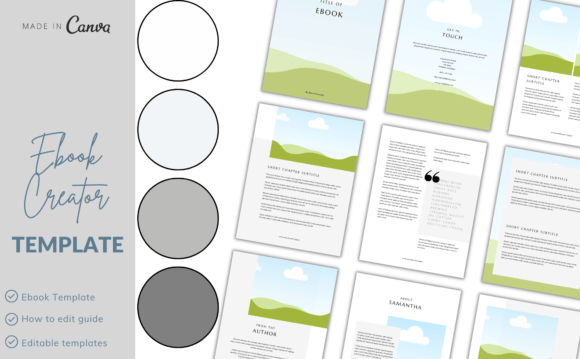
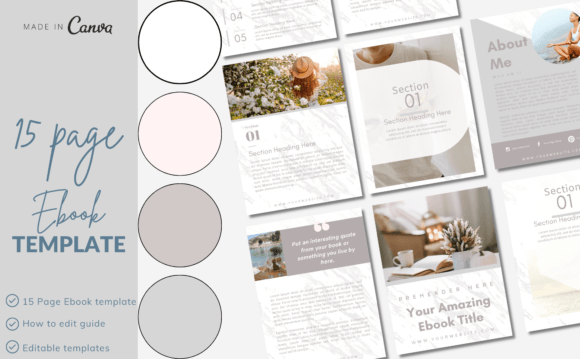
When we talk about a "template," we are often referring to a rigid grid. However, these Canva assets function more like a dynamic design asset ecosystem. The visual characteristics of these templates lean heavily into modern typography and clean editorial design principles. You will typically find a balanced interplay between bold headers and readable body text, utilizing a mix of sans serif font families for clarity and serif font accents for a touch of authority.
The overall appeal lies in their neutrality and adaptability. They avoid overly trendy decorative elements that might date your content in six months. Instead, they focus on structure. Whether the template utilizes a script font for an elegant flourish or a bold display font for impact, the hierarchy is already established. This ensures that your content—whether it is a marketing guide, a fitness workbook, or a creative journal—looks organized and professional. The personality is one of competence and organization, signaling to your audience that you value their time and experience.
Strategic Applications: Where These Templates Shine
The versatility of Canva Online Course Workbook Templates extends far beyond just printing a PDF. Because they are built within Canva, they are natively optimized for digital consumption, making them ideal for web design integration and social media graphics. However, their utility spans across various mediums:
- Digital Course Materials: The primary use case is, of course, education. They provide a structured environment for learning, making complex information digestible through visual cues.
- Brand Identity Systems: Use these templates to extract your brand identity. By locking in your colors and fonts within the template, you create a style guide that ensures consistency across all platforms.
- Marketing and Lead Magnets: A well-designed checklist or ebook is a powerful tool for email list growth. These templates allow you to create high-value lead magnets that look like premium content, increasing perceived value.
- Packaging Design and Inserts: If you sell physical products, these templates can be adapted for thank-you cards, instruction manuals, or packaging inserts, maintaining a cohesive logo design and color story.
For the solopreneur managing a commercial font library or a blogger creating daily content, the ability to access these files on a phone or tablet means you can update your brand collateral from anywhere. This mobility is crucial for modern content creators who need to pivot quickly.
The Psychology of Type: Influence on Audience and Readability
Typography is silent communication. The choice of a typeface influences how your audience perceives your authority before they read a single word of content. When you utilize Canva Online Course Workbook Templates, you are inheriting a typographic hierarchy that has been tested for readability.
For example, a template pairing a geometric sans serif font with a classic serif font creates a visual rhythm. The sans serif captures attention for headlines (high impact), while the serif handles long-form body text (high readability). This contrast prevents visual fatigue. Conversely, if a template uses a handwritten font for headers, it immediately sets a casual, approachable tone—perfect for lifestyle coaching or crafting tutorials, but perhaps less effective for corporate financial reports.
Consistency in these choices builds recognition. When a customer sees your workbook, then your Instagram story, and then your website, the repeated use of the same creative font pairings and color palettes creates a sense of familiarity. This is the essence of brand identity—it reduces friction and builds trust. If your typography is chaotic, your brand feels unprofessional. If it is consistent, your brand feels established.
Practical Implementation: Maximizing the Canva Ecosystem
To get the most out of these resources, you need to move beyond simple text replacement. Here is a practical guide to evaluating and utilizing these templates effectively:
- Evaluate the Hierarchy: Before customizing, look at the structure. Does the template use a bold display font for H1s and a lighter weight for H2s? Good hierarchy guides the reader's eye naturally from point A to point B.
- Font Pairing Logic: Don't just swap fonts randomly. If the template uses a serif for headers, try swapping it with another serif of a similar x-height. Mixing a heavy script font with a light sans serif font can work, but ensure the contrast is intentional, not accidental.
- Check the Licensing: Canva provides access to many fonts, but if you are using a premium font or a specific commercial font included in the template file, ensure your usage rights cover your intended distribution method (e.g., selling the PDF).
- Mobile Optimization: Test your design on a mobile device. A layout that looks spacious on a desktop monitor can feel cramped on a phone screen. Use Canva’s responsive resize features to tweak margins.
By treating Canva Online Course Workbook Templates not just as a file to be filled, but as a strategic design asset